












(AI Overview) Key Developments (as of March 13, 2026):
-
The United States and Israel launched Operation Epic Fury on Feb 28, targeting senior Iranian leadership in Tehran.
-
Iranian Supreme Leader Ayatollah Ali Khamenei was killed during the strikes.
-
Iran retaliated with missile attacks across the region, expanding the conflict to include Israel and multiple U.S.-allied states in the Middle East.
-
Hezbollah launched over 200 missiles at Israel, prompting Israeli ground operations in Lebanon.
-
The United States reports over 15,000 targets struck inside Iran during the campaign.
-
13 U.S. servicemembers have been killed during Operation Epic Fury.
-
Oil markets have been heavily disrupted as shipping through the Strait of Hormuz slowed significantly, pushing global prices above $100 per barrel.
-
The United States is preparing to escort oil tankers through the Strait of Hormuz while deploying additional naval and Marine forces to the region.
The Opening Strikes
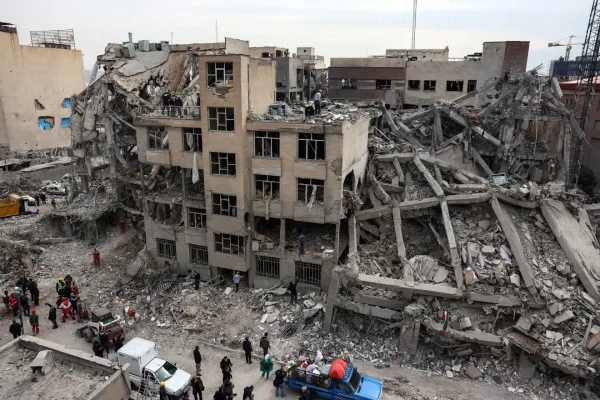
On Saturday, Feb 28, 2026, during the morning hours in Tehran, with full daylight and visibility, the United States and Israel commenced a joint military operation, named Operation Epic Fury, targeting top Iranian officials.
According to the Wall Street Journal, Israeli and American intelligence saw a very unique opportunity to strike; they knew three different meetings that would be taking place between Iranian officials. Perhaps even more importantly, they had the confirmed location of Supreme Leader Ayatollah Ali Khamenei.
Israeli jets dropped 30 bombs directly on Khamenei’s compound, leaving it completely scorched and destroyed.
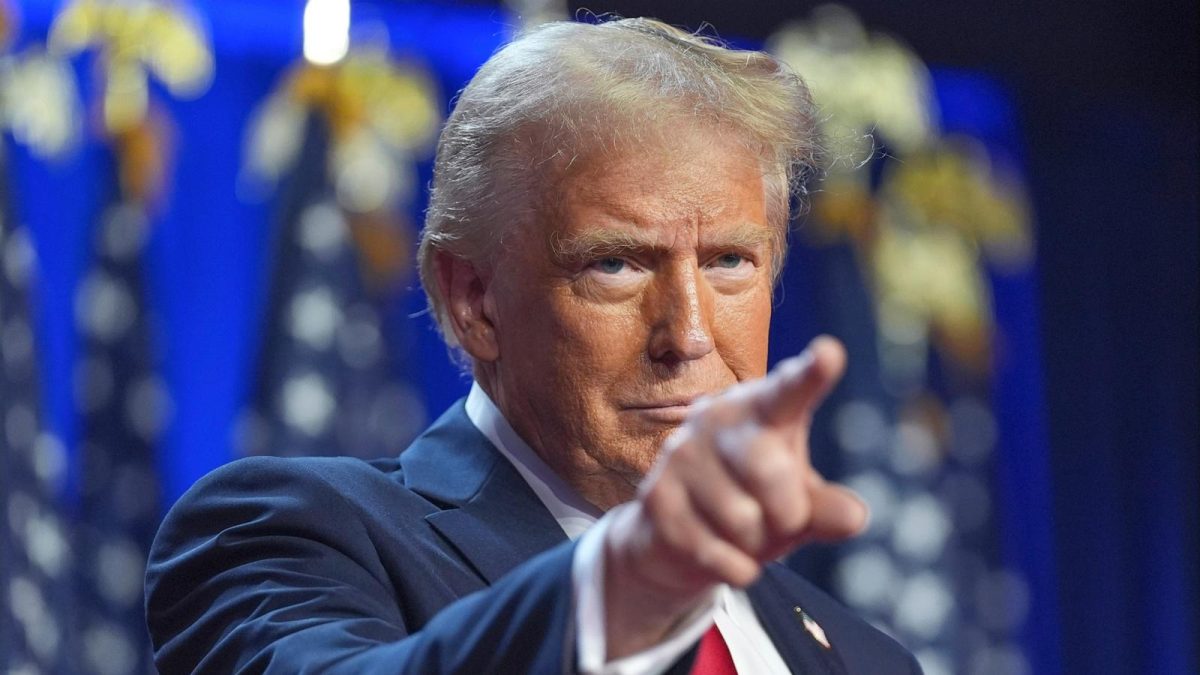
At 2:30 AM EST, President Trump addressed the nation in a message, explaining that the U.S. and Israel have commenced “major combat operations in Iran.”
It was announced on the night of Feb 28, on Iranian state-sponsored television, that the Supreme Leader of Iran, Ayatollah Khamenei, was killed during the military strikes conducted by Israel and the United States.
Israel also confirmed the deaths of Ali Shamkhani, a top security adviser to Khamenei; Mohammad Pakpour, commander of the powerful Islamic Revolutionary Guard Corps; and Defense Minister Amir Nasirzadeh.
Strategic Context
At the start of the “12-day war” in June 2025, Israel launched a surprise attack against nuclear scientists and facilities across Iran during the night.
When the United States got involved in the war a couple days later, the operation also took place at night. Therefore, the deviation from a night attack was considered to be a tactical surprise by Israel and the United States.
Initially, it was unclear whether Operation Epic Fury was a single round of strikes, or if a larger conflict would follow the initial strikes.
Political Background Inside Iran
There has been internal political pressure on Tehran since the death of Mahsa Amini in 2022, which sparked widespread national outrage. However, in 2025, the Islamic regime in Iran found themselves in a major economic crisis. Protests over western sanctions and hyperinflation took place in Iran towards the end of 2025. Women stopped following the “morality laws” as strictly, and people began to play western music in the streets of Tehran.
Calls for economic and social reforms were met by the Islamic regime and the IRGC (Islamic Revolutionary Guard Corps) with bullets. The IRGC opened fire on protestors, killing over 30,000 protestors in two days, according to Time Magazine.
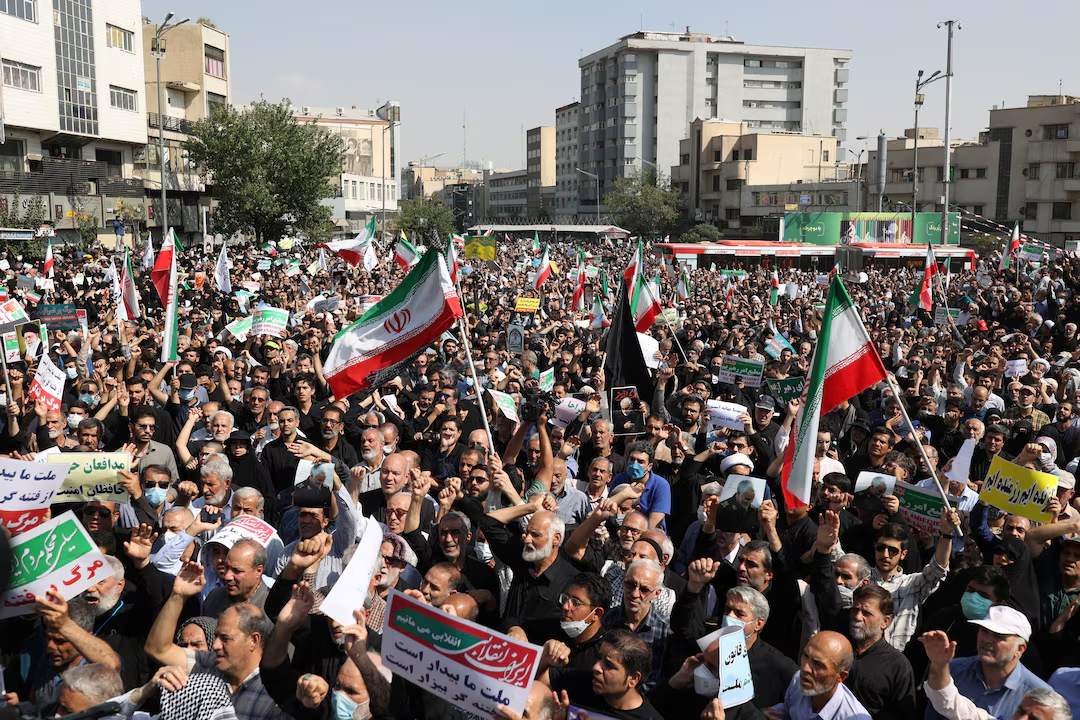
The Iranian regime has made their ideological opposition towards the United States and Israel evident throughout their history, often chanting slogans such as “Death to Israel” and “Death to America.”
Escalation Into Regional War
Iran responded to the initial strikes by attacking Israel and U.S.-allied countries across the Middle East. Some military analysts have called this move a tactical error by the Islamic regime, as now they find themselves involved in a larger regional conflict.
After the second day of bombings, diplomatic negotiations between the United States and Iran went awry. Iran declared that they would refuse to surrender or negotiate, in line with their ideological doctrine.
As of Mar 13, 2026, the U.S.-Israeli military Operation Epic Fury has grown into a larger conflict, as different fronts of the war have continued to open.
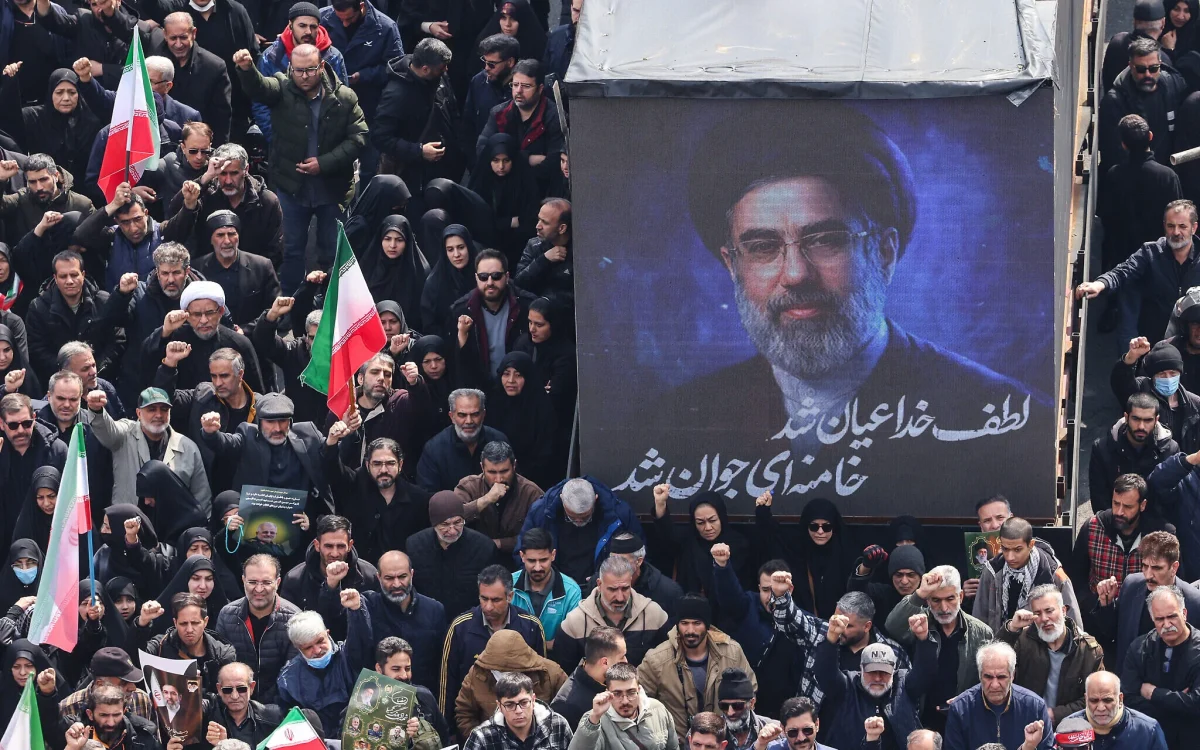
Iran has chosen their new Supreme Leader, Mojtaba Khamenei, the son of the late Supreme Leader. This is a major diversion from precedent, as hereditary rule has typically been seen as “anti-Islamic” by the regime.
U.S. officials, including Vice President JD Vance, have announced that the new Ayatollah Khamenei was wounded in the same strikes that killed his father. “We don’t know exactly how bad,” he said. Some reports have indicated that Supreme Leader Mojtaba Khamenei may have been disfigured; however, there is not a clear indication of his condition.
So far, NATO forces have intercepted three missiles in Turkish airspace. Hezbollah has begun launching missiles at Syrian targets; they are also engaged on another front with Israel.
On March 11, Hezbollah, although previously weakened by the Israel-Gaza conflict, launched a surprise attack of over 200 missiles towards Israel. Israeli Prime Minister Benjamin Netanyahu issued an evacuation order of substantial areas of Lebanon, most notably the entire area south of the Litani River and the southern suburbs of Beirut.
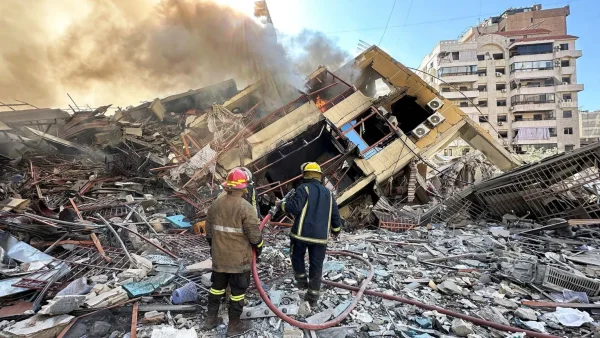
Israel has begun a major ground operation in Lebanon as a response to the missiles fired by Hezbollah. Referring to the scale of the conflict and flattening of buildings, a senior Israeli official said, “We are going to do what we did in Gaza.”
Another Israeli official commented that “before this attack, we were ready for a ceasefire in Lebanon, but after it there is no way back from a massive operation.”
Military Developments
Also, at a press conference today, Defense Secretary Pete Hegseth celebrated that the U.S. and Israel have hit more than 15,000 enemy targets within Iran, declaring a “no mercy” mentality towards the Iranian regime.
The headline of the day from President Trump is that U.S. bombs have “obliterated” military targets on Kharg Island, an island from which Iran exports 90% of its crude oil. President Trump posted on Truth Social that the U.S. “obliterated every MILITARY target in Iran’s crown jewel, Kharg Island.” However, he also mentioned that the U.S. did not attack any oil infrastructure on the island, but that the U.S. would do so if Iran continued to attack ships passing through the Strait of Hormuz.
According to various sources, Israel has also struck certain oil refineries in Iran, which the U.S. has been firmly against. The striking of oil refineries is one of many actions taken that has expressed misalignment between Israeli and U.S. interests.
President Trump also announced a plan that the U.S. Navy would begin to escort oil tankers through the Strait of Hormuz “very soon.”
The Pentagon announced today that they are moving a Marine expeditionary unit and more warships to the Middle East. The Marine unit is likely to comprise approximately 5,000 servicemembers with around 2,000 potential ground troops, if deemed necessary.
Casualties and Controversies
As of March 13, thirteen U.S. servicemembers have been killed, with ten others seriously injured during Operation Epic Fury. Most recently, a refueling jet crashed in Iraq, killing all six servicemembers on board. It is believed that the jet was not attacked by ammunition, but rather had a system issue.
Members of Congress, mostly Democrats with a handful of Republicans, have been demanding answers about a strike on an Iranian school on the first day of the conflict. The school was previously located on a military base; however, because of a change in the layout of the base, the school was no longer attached to the military base at the time of the attack.
At least 150 children died during the attack on the school, on which U.S. investigators have said the U.S. was “likely responsible.”
Casualty figures across the region vary depending on the source and remain difficult to independently verify as the conflict continues to escalate.
Estimated casualties reported by various international sources include:
-
United States: 13 servicemembers killed and 10 seriously injured during Operation Epic Fury. (Source: U.S. Department of Defense)
-
Lebanon: At least 773 people killed and approximately 800,000 civilians displaced during the conflict with Israel. (Source: Axios)
-
Iran: At least 1,350 people have been killed since the war began as of March 8. (Source: Iranian State Media)
-
Israel: 14 deaths have been reported following Iranian missile strikes and Hezbollah attacks on Israeli territory. Twelve civilians have been killed, along with two soldiers in Lebanon. At least 100 people have been injured. (Source: Reuters)
All Casualty figures are as of Mar. 13, 2026. These figures will be updated periodically.
Global Impact
This conflict has grown from the original strikes and assassination to a much larger regional conflict between Iran and U.S.-Israeli interests in the Middle East. Qatar has begun evacuations, the UAE has been under constant bombings with several hotels in Dubai hit. Targets in Saudi Arabia have also been attacked. Bahrain and Kuwait have been under constant attack, and the U.S. has evacuated 50,000 American citizens from the Middle East.
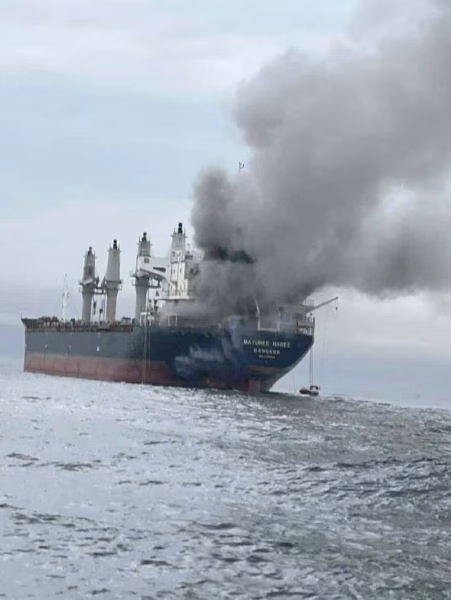
The Strait of Hormuz has seen traffic slow to a halt, which some experts say may lead to a global recession. After a volatile week that saw oil prices rise above $120 globally, prices have settled slightly above $100 dollars a barrel. The halting of 20% of the world’s oil traffic has caused Russia to emerge as a clear beneficiary of the global energy crisis. Earlier in the week, President Trump announced a temporary lift on Russian oil sanctions for certain U.S. allies in order to curb rising prices.
Outlook
The U.S. government has said that the operation will most likely continue for at least 4–5 more weeks, with President Trump saying that he will take “as long as is necessary.”
The Trump administration has made clear that the objective of this military operation is not to facilitate “regime change,” but rather the destruction of Iran’s navy and nuclear capabilities. However, that is not how this conflict has been seen.
President Trump said on Friday that the war will end “When I feel it–feel it in my bones.” All indications point to a larger regional conflict that has the potential to drag on for years. The conflict has continued to escalate since its inception, and, with the Islamic regime showing no signs of backing down, President Trump may have no choice but to engage in a prolonged operation.
Any questions or comments: reach out to [email protected]
March 17, 2026 Update
Since Friday, March 13, Iran has continued an assault on neighboring countries in the middle east. Saudi Arabia has intercepted over 100 Iranian drones over the past few days, and the United Arab Emirates has been under constant attack from Iranian missile strikes. Additionally, the U.S. embassy in Iraq has been utilizing missile defense systems to combat Iranian strikes. Iran has continued to target oil infrastructure across the region, with this weekend seeing the UAE and Iraq take the hardest hits.
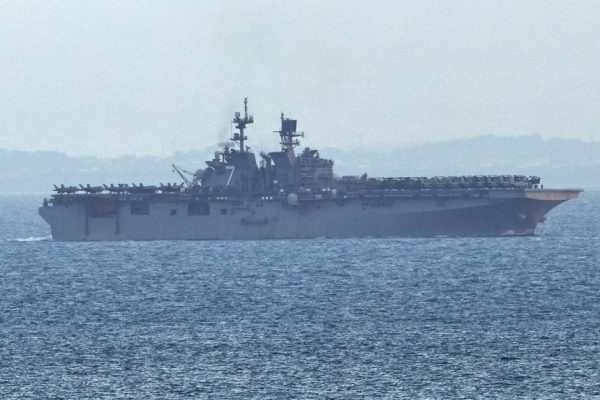
According to CNN, the USS Tripoli warship, believed to be carrying thousands of potential Marine ground troops, was spotted off the coast of Singapore. The defense department has said that over 50,000 U.S troops and military personnel are currently in the Middle East because of the war in Iran.
Israel announced today that they eliminated the Iranian Security Chief, Ali Larijani, and Basji force commander, Gholamreza Soleimani, in a series of airstrikes on the outskirts of Tehran. Iran launched a barrage of strikes towards Central Israel today in a response which has killed at least 2 people from shrapnel wounds.
Domestically, Joe Kent, director of the National Counterterrorism Center, resigned today, becoming the first U.S. official to voice open dissent against the war in Iran. He delivered a public letter in which he wrote, “I cannot in good conscience support the ongoing war in Iran…Iran posed no imminent threat to our nation…” He mentioned his extensive former career in the military as a reason why he “cannot support sending the next generation off to fight and die in a war that serves no benefit to the American people nor justifies the cost of American lives.” He also made a point that the “Israel Lobby” was behind this war. He also suggested that the “Israel Lobby” dragged the U.S. into Iraq in 2003. Responding the Kent’s resignation, the Wall Street Journal released an editorial titled “Joe Kent Resigns on Anti-Israel Principle.”
Lastly, the war in Iran has continued to create a schism between the U.S. and its European allies. President Trump has expressed major displeasure with the UK’s approach to the war, along with several other key allies. While France may end up working with the U.S. to open the Strait of Hormuz, the gap between the U.S. and Europe on involvement in Iran is evident.