







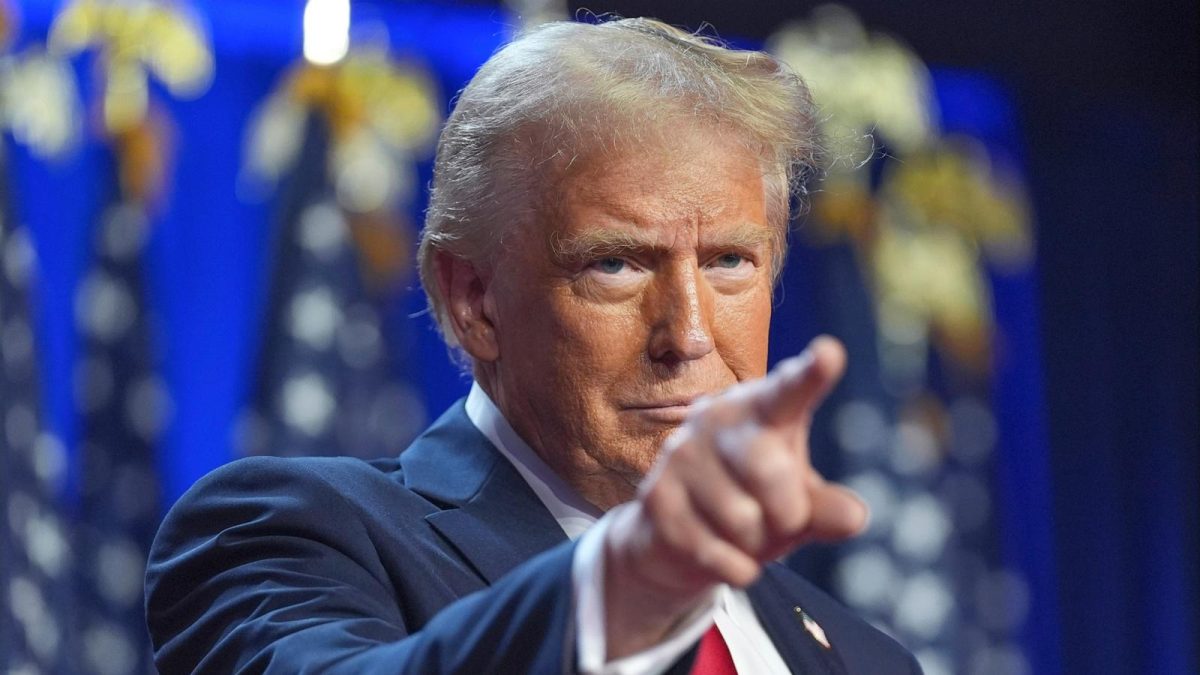



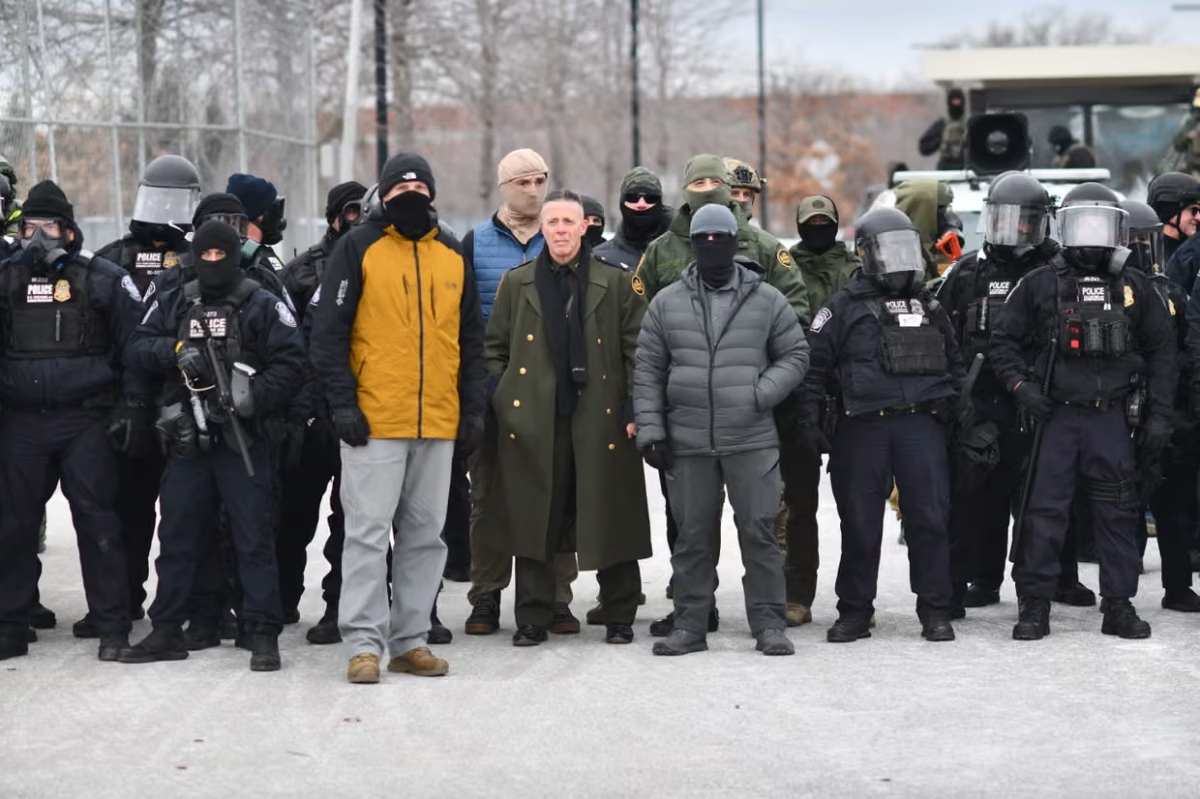








Given the national spotlight that President Trump’s Department of Homeland Security has garnered, as a result of their public immigration enforcement campaign, The Xavier Review finds it imperative to provide factual information about the deportation processes under President Trump’s second administration.
The Trump Administration has goals to deport as many illegal immigrants as possible, with many prominent members within the administration calling for the deportation of all illegal immigrants. President Trump has responded to mass deportation calls from his inner circle and political base, orchestrating a deportation strategy that is two-fold: self-deportations and forcible removals.
According to the federal government, 2.2 million people have self-deported from January 2025–February 2026. While the Department of Homeland Security has been consistent in their own figures, the explanation as to how they surmised such a large self-deportation figure is limited. Independent estimates suggest that the total number of self-deportations is much lower, with most analyses placing the number somewhere between 600,000-1,000,000 individuals.
The federal government has used extra funding, allocated for immigration enforcement in the ‘One Big Beautiful Bill Act’ of 2025, in order to persuade illegal immigrants to “self-deport.” As of January 21, 2026, the Department of Homeland Security has raised the initial stipend for any illegal immigrant who wishes to self deport through the CBP (Customs and Border Patrol) Home App from $1,000 to $2,600, along with a free flight to their home country.
While the DHS’s figure of 2.2 million self-deportees has been thoroughly questioned by outside analysis, reports indicate that the number of self-deportations has been on the rise lately. The Trump Administration has touted their rhetoric and widespread deportation operations as reasons for the increased number of self-deportees, however, others believe that the real reason might stem from the aggressive and broader enforcement tactics that the Department of Homeland Security has been using.
Earlier in President Trump’s second term in office, there were many immigration raids carried out that targeted known gang members and sex offenders. These raids were carried out with evidence, warrants, and were focused on a specific group of threatening individuals. However, quickly after the first couple months of President Trump’s second term, the tactics moved from precise operations toward broader, location-based enforcement. The Trump administration also moved focus away from what they call “the worst of the worst.” Instead of showing up at drug compounds, ICE agents have been conducting immigration enforcement at restaurants, stores, community centers, and even places of worship.
While there have been lots of funds and efforts allocated towards self-deportation methods, as stated, the Trump administration has been strenuous in their forcible removals, in tandem with their efforts towards self-deportations.
The New York Times reported that over 500,000 immigrants were forcibly removed by the Trump administration during 2025. This number is smaller than the previous two years under the Biden administration with 650,000 deportations in 2024 and 590,000 in 2023. This fact begs the question, why is immigration enforcement in the national spotlight today if enforcement overall has not increased?
There are three main reasons:
First, the Biden Administration oversaw an unprecedented surge in border crossings, giving them many more people to arrest and deport at the border. In 2024 alone, the Biden administration deported almost 600,000 people at the border. In 2025, border crossing dropped dramatically, allowing for less arrests at the border and a shift in focus towards interior enforcement. While the Biden administration did deport more illegal immigrants as a whole, the Trump administration has already deported more people through interior deportations than the Biden administration did throughout all four years. In fact, the Trump administration conducted the most internal deportations in one year since 2011. Most of the controversy surrounding ICE and the DHS stems from these internal enforcement operations.
Secondly, the Trump administration has administered immigration enforcement targeting a much larger share of individuals without criminal charges or convictions. As stated, at the beginning of 2025, immigration enforcement almost exclusively targeted criminals. The Wall Street Journal reports that at first, 87% of ICE arrests were people that either had a prior conviction or a criminal charge pending. However, in sharp contrast, since October, 73% of ICE arrests were for people that had no criminal charge, and only 5% of those arrested since October have had previous violent convictions.
In this same time frame, interior ICE arrests have ballooned across the country, especially since the signing of the Laken Riley Act, and, subsequently, the One Big Beautiful Bill Act. The increase in ICE arrests, coupled with the sharp decrease in arrests of criminals, has led to public outrage from various groups over the Trump administration’s treatment of immigrants.
Third, the methodology and rhetoric. At least 32 people have died in ICE custody since Trump took office for the second time, more than the entirety of Biden’s 4 years in office. In the media, there were two high profile deaths of American citizens, Renee Good and Alex Pretti. These two incidents have greatly intensified national scrutiny of the Trump administration’s immigration practices.
It is important to note that a major difference between this administration and previous federal immigration enforcement efforts is the cooperation between state and federal law enforcement. In many Democratic-led states, the state governments have directed state law enforcement to not comply with, and aid federal immigration enforcement. This lack of compliance has resulted in federal officers serving as protection for other federal officers as they conduct these immigration raids. The federal officers do not have the same knowledge of the area, or de-escalation tactics that local law enforcement officers might have. The replacement of local law enforcement with federal law enforcement has been a potential factor for the increase in aggressive and escalatory tactics by ICE agents.
Overall, the issue of immigration enforcement in America is complex and nuanced, however, recent aggressive tactics and interior crackdowns have led to some discontent and outrage over current immigration policy. The aim of this article is to provide factual information regarding the immigration crackdown since President Trump reclaimed power in 2025. In an age that many label the “age of misinformation,” it is imperative to consume factual information on important issues.
Any comments, questions, or concerns: please reach out to [email protected]