











Introduction
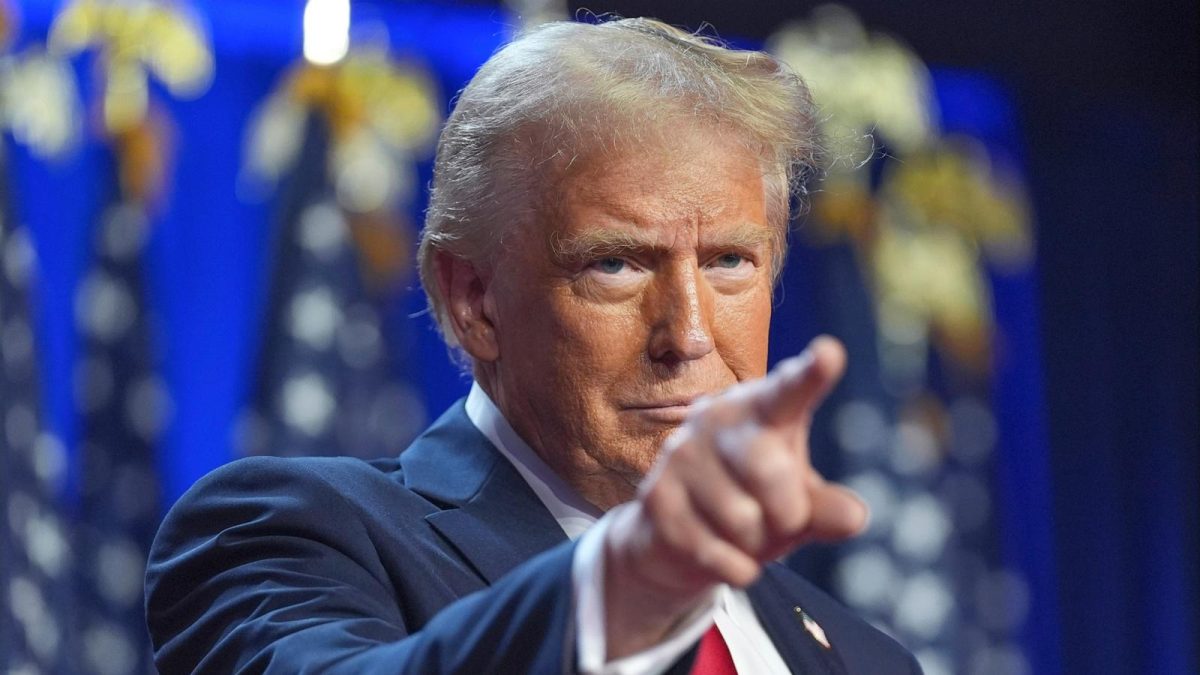
2025 has been one of the most consequential years in recent memory, perhaps since 2020. During 2025, there was a dramatic shift in global political order, marking the return of U.S.-dominated, unilateral geopolitics under President Trump. The following ranking examines the five most consequential geopolitical events of 2025 and their lasting impact on the world stage. These events are ranked according to a synthesis of their long-term impact on global stability, regional power balances, and U.S. influence.
Honorable Mention: Nuclear Brinkmanship Averted Between India and Pakistan
First, an honorable mention to the India-Pakistan conflict of May 2025. During the conflict, India and Pakistan appeared closer to engaging in a full-scale war than at any point since border skirmishes seven years earlier. However, through diplomatic mediation by Marco Rubio and President Trump, the U.S. was able to push a negotiation for a ceasefire between India and Pakistan, both countries that wield advanced, nuclear-armed militaries. A war between these two global powers would have had major ramifications across the region and the globe.
#5: Stabilizing the Caucasus Between Armenia and Azerbaijan
By 2025, there were no longer large numbers of Armenians living within Azerbaijan territory. For this conflict, 2025 was more about declaring clear borders, as opposed to continuing to dispute the mutual land claims between Armenia and Azerbaijan. As a result, in 2025, Azerbaijan was able to consolidate their control over Karabakh, and, with U.S. involvement in the peace negotiations, Russia’s declining influence in the region became clear and obvious. President Trump publicly promoted ceasefire efforts between Armenia and Azerbaijan, pushing for de-escalation and encouraging negotiations between the nations. Unlike other conflicts, this was not a dramatic battlefield ceasefire. The de-escalation of the conflict focused on preventing renewed fighting, stabilizing borders, and preventing a future conflict that could include outside involvement from other parties.
#4: Coercive Diplomacy and U.S. Military Action In Venezuela
Throughout 2025, President Trump consistently increased the political pressure on Nicolás Maduro, calling on him numerous times to step down as leader of Venezuela. The Venezuela-U.S. tension increased under the Biden Administration in 2024 after Maduro had stolen an election from the opposition party and Edmundo González. Experts believe that González won the election by a wide margin, however, because the electoral board is controlled by Maduro’s cronies, he was declared the president anyway. In response to the election theft, the U.S. government deemed Maduro’s regime to be illegitimate and immediately moved to impose heavy sanctions. In October 2025, President Trump warned Maduro “not to F— around with the United States.” This was the last public warning that Maduro got from Trump. Additionally, the Trump administration interpreted Maduro’s public dancing in late 2025 to be an open mockery of President Trump and the United States.
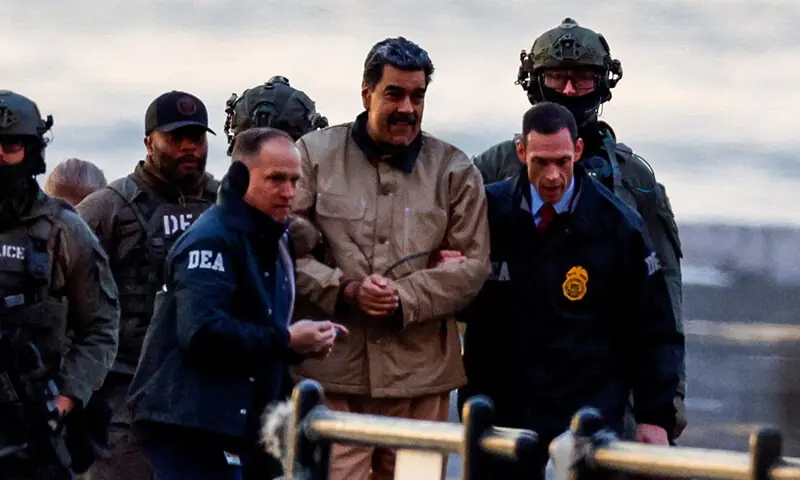
By the end of 2025, sustained U.S. pressure had brought the tensions between the U.S. and Venezuela to a breaking point. Jan 3, 2026 marked a dramatic shift in the conflict. In Operation Absolute Resolve, President Trump and Secretary of State Marco Rubio directed a Delta Force Team to infiltrate Maduro’s compound and carry out a warrant for his arrest. This operation was a success and Maduro is currently in U.S. custody. Currently in Venezuela, the interim president is Delcy Rodríguez, and President Trump has already issued her many warnings, claiming that she will serve as a leader who answers to the U.S. Lastly, it is important to note that Rodríguez has built her whole career upon the foundation of fighting U.S. imperialism, so it will be interesting to see how much control the U.S. can really have over Rodríguez.
#3: Ceasefire and Hostage Negotiations in Gaza
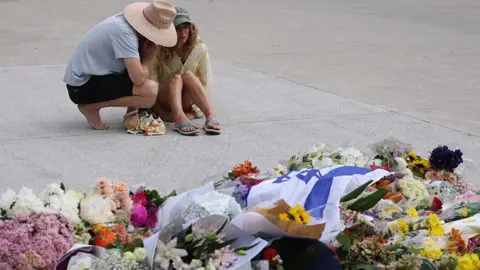
On October 13 2025, the last 20 living hostages remaining in the Gaza Strip were freed after over 2 years in captivity. Leading with the U.S. Gaza Peace Plan, President Trump was able to swiftly negotiate with Hamas to bring back the remaining hostages. The Gaza Peace Plan also marked a ceasefire in the war, albeit not fully followed. Both sides of the conflict have been constantly breaking the ceasefire as skirmishes have been erupting across the Gazan ‘yellow line’ since the ceasefire was instated. Despite these skirmishes, the Gaza Peace Plan did mark the end of large-scale advances and attacks by either side. This was a major diplomatic win for the U.S. and a major victory for the people of Israel and Gaza alike.
Despite this apparent win for humanity, two things still remain true: 1. Gaza has been destroyed through this war, and even if the fighting has eased, people there are still struggling greatly in a humanitarian crisis, lacking significant access to basic necessities. 2. The Prime Minister of Israel, Benjamin Netanyahu, was unable to free the hostages without U.S. involvement, representing a lack of priorities and dysfunction from the Likud coalition. However, the freeing of the hostages remains a monumental component in this conflict as the country of Israel can finally breathe again. While Palestinian people have not been granted this same freedom of security yet, the conflict has begun to move in that direction, or at least more than it was previously.
#2: The “12-Day war”
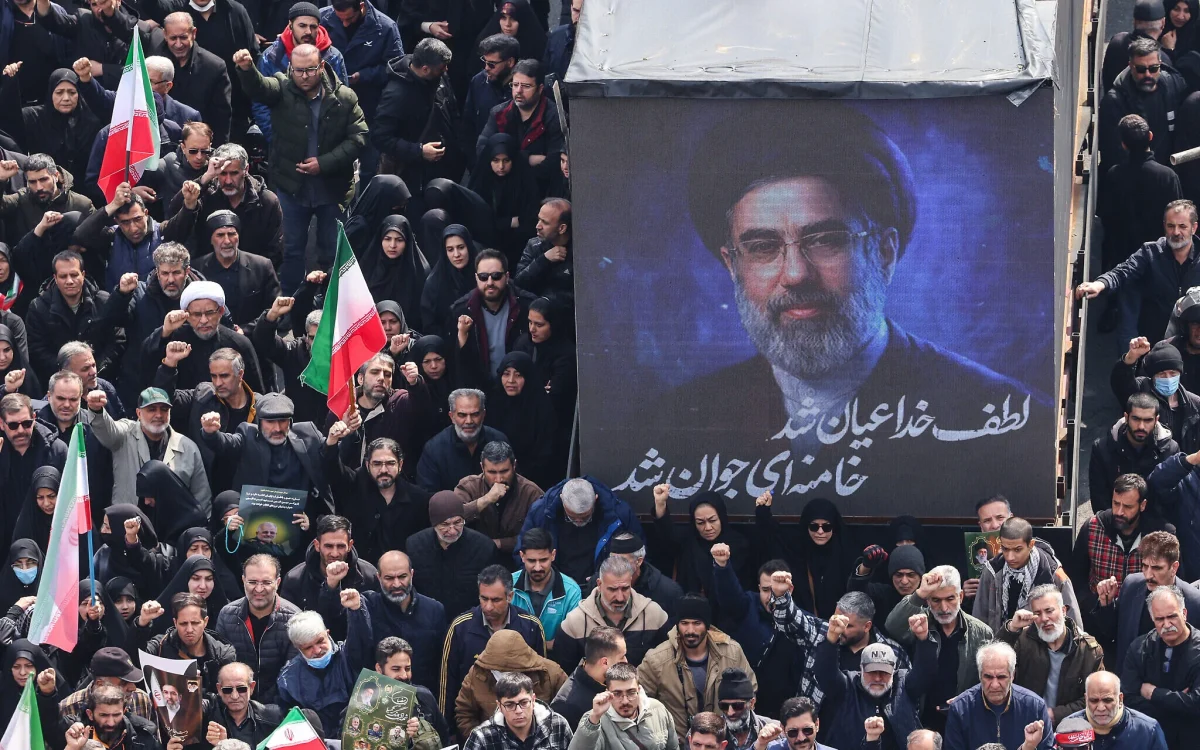
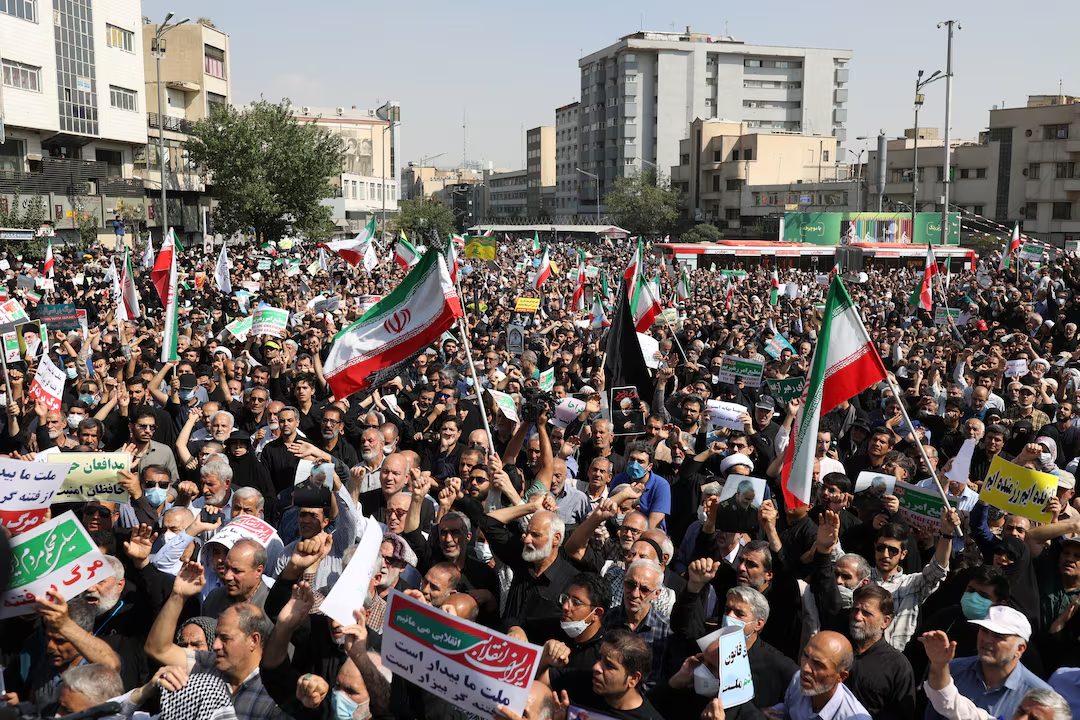
The “12-Day war” between Israel and Iran in June is one of the most influential moments in geopolitics in recent memory. Two regional superpowers clashed in a war that asserted Israel’s militaristic power in the region, while simultaneously decimating Iran’s reputation as a powerful regional power. During the war, the Israeli Defence Forces blew up nuclear facilities, along with assassinating many high-ranking individuals in the Iranian government. The nuclear sites in Iran were massively damaged, and scientists were killed, delivering a major blow to the security of the country.
This war can be summed up best by the amount of commanders that died on each side. Both sides of this war had nine commanders. On the allied side, Israel had four commanders and the U.S. had five. None of them died or were injured. On the other side, there were also nine commanders, with seven coming from Iran and two coming from the Houthis. Unlike the U.S. and Israel, Iran had four commanders killed with two of them being their highest ranking military officials in Mohammad Bagheri and Hossein Salami. These assassinations were devastating blows to the Iranian regime’s credibility. In addition, with the current political situation, it seems as if Israel has successfully aided the destabilization of Iran.
#1: The Enduring, Industrial-Scale Russo-Ukrainian War
On February 24 2022, the Russian army invaded Ukraine, marking the beginning of the deadliest European war since World War II. Since its inception, the war has only intensified, with 2025 seeing some of the deadliest and most consequential battles of the war. By the end of 2025, Russian soldiers occupied approximately 20% of Ukraine. The conflict has gained its scale through greater western funding, coupled with Russia receiving assistance from its own allies, most notably Democratic People’s Republic of [North] Korea. The DPRK supplied weapons and soldiers to the Russian army in 2025 that saw some of the deadliest and most crucial battles of the war.
The style of warfare being used in this war has evolved over time from maneuver warfare to a war that has to do with technology and disruption of the civilian populations. This can be seen consistently through power outages and recent heating shortages in Ukraine, threatening the civilian population through the winter. Overall, U.S. diplomacy has not been effective in dealing with this conflict as President Trump claimed that he would end this conflict within his first week in office but has failed to do so.
Final Thoughts
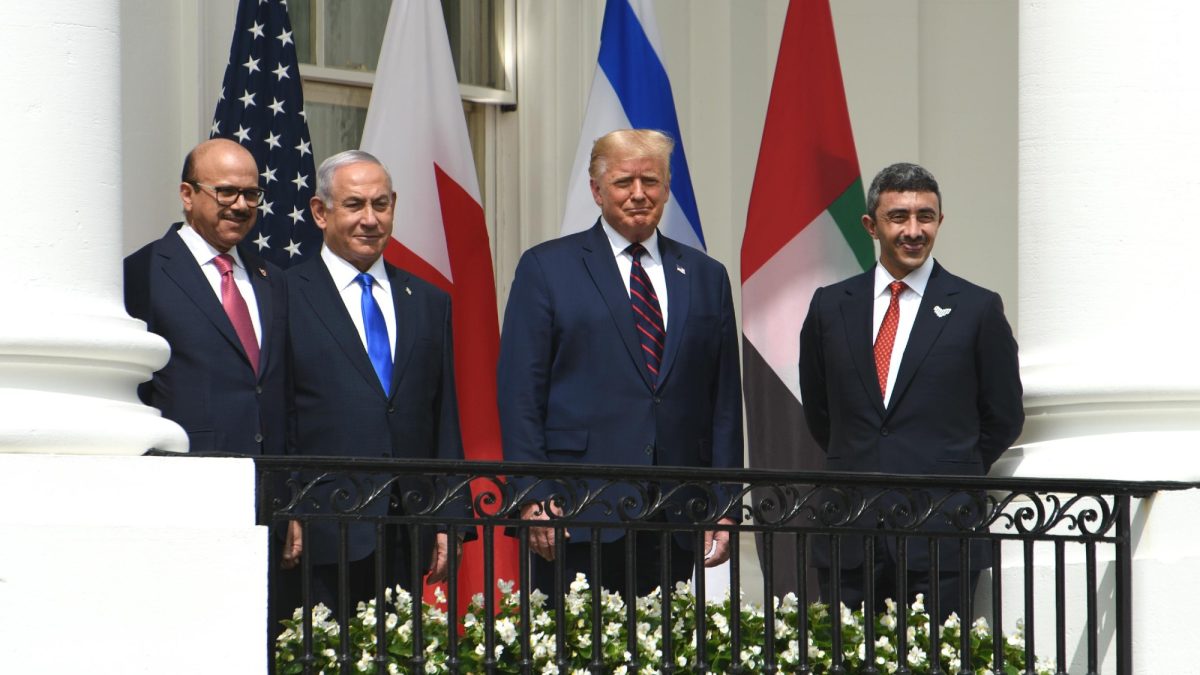
Ultimately, 2025 revealed a major shift in how global power is being exercised. Through diplomacy, military deterrence, and direct intervention, the United States has reasserted itself as a dominant force in shaping geopolitical outcomes. President Trump has shifted the U.S. towards a unipolar standing in geopolitics through his involvement in foreign affairs. This new order could help promote U.S. influence and prosperity, or it could lead the U.S. into an unsustainable global position down the line.
For any questions or inquiries, please reach out to [email protected].