













“[email protected]” — the now-infamous email account tied to millions of files connected to Jeffrey Epstein — has become one of the most recognizable symbols of a scandal that implicated some of the world’s most powerful figures. Epstein ran a years-long sex trafficking operation, involving underage girls and elite associates. This article examines how that network was exposed, how accountability was delayed, and why the fallout continues to grow.
In 2005, the Palm Beach Florida Police Department officially launched a formal investigation into Epstein. The Palm Beach Police Department launched this investigation after receiving an initial report from a 14-year-old girl, claiming that she had been molested inside of Epstein’s mansion. Additional reports would follow from high school-aged girls, claiming that they had been taken to Epstein’s residence and asked to provide sexual favors to Epstein and his guests.
A year after the onset of this investigation, Police officials in Palm Beach were signing off on plans to charge Epstein with multiple counts of unlawful sex with a minor. However, in an unusual move, State Attorney Barry Krischer decided to send the case to a grand jury.
Two months later, on July 27, 2006, Epstein was arrested after a grand jury indicted him with prostitution-related charges. As a result of these lesser charges, Palm Beach Police Officials were growing frustrated with the slow movement of the investigation. Around the same time, the Federal Bureau of Investigation (FBI) officially began its own investigation into Epstein.
In 2007, federal prosecutors had prepared an indictment against Jeffrey Epstein. However, Epstein’s lawyers engaged in months-long talks with U.S. Attorney for the Southern District of Florida, Alexander Acosta, about a possible deal to avoid federal prosecution. Epstein’s defense team based their argument heavily on the premise that the accusers were unreliable because of their ages and troubled backgrounds.
In 2008, Epstein pled guilty to state charges in Florida of soliciting prostitution and soliciting prostitution of a minor. However, under a secret arrangement, the U.S. Attorney’s office of the Southern District of Florida made a deal with Epstein’s legal team, asserting that they would not prosecute Epstein for federal crimes.
Epstein was sentenced to 18 months in state prison, which was later re-negotiated to county jail. The local sheriff’s office approved Epstein for a “work-release” program, allowing him to leave jail for up to 12 hours a day, 6 days a week. Epstein paid for his own surveillance, as he was allowed to roam outside the jail walls for almost as much time as he spent inside.
While Epstein was serving his sentence, Virginia Roberts Giuffre, one of Epstein’s accusers, filed a lawsuit against Jeffrey Epstein and Ghislaine Maxwell, a former European socialite and Epstein’s primary accomplice, who was found guilty in 2021 for sex trafficking and other offenses. In this lawsuit, Giuffre accused Epstein and Maxwell of arranging her to have sexual encounters with “royalty, politicians, academicians, businessmen, and others.” However, despite her claims of abuse from the world’s foremost figures, none of these men were initially named in the lawsuit.
While the lawsuit was still ongoing, Epstein was released in July 2009 after serving 13 months in county jail. For the next 10 years, Epstein’s victims waged a valiant legal fight to void the federal non-prosecutorial agreement between Epstein and the government.
In 2011, The Daily Mail published a bombshell interview with Giuffre, who claimed that, at 17, she had spent a night in London dancing with Andrew Mountbatten-Windsor (then known as Prince Andrew). A photo was also shown from the dancefloor with Mountbatten-Windsor’s arms firmly placed around Giuffre’s body.

In 2014, Giuffre’s lawyers filed court papers stating that she not only had sexual encounters with Mountbatten-Windsor, but also “foreign presidents, a well-known Prime Minister, and other world leaders.”
In 2018, the FBI headed back to Miami to revisit Attorney Alexander Acosta’s dealings with the case, who, at this point, was President Trump’s Secretary of Labor. Partly because of Acosta’s involvement, this new investigation makes national headlines.
Within half a year, Epstein was again arrested for new sex trafficking charges raised by the U.S Attorney’s office of the Southern District of New York. Almost immediately after, Acosta resigned as labor secretary amid national scrutiny over his handling of the original indictment.
The Epstein saga took its biggest shift on August 10, 2019. Epstein had been in Federal jail in New York City for a little over a month awaiting trial. To the surprise and shock of many, Jeffrey Epstein was found dead in his jail cell. The New York State Medical Examiner ruled his death to be a suicide by hanging; however, this ruling has been criticized by many and speculated to be false.
In 2021, Maxwell was officially convicted of sex crimes, including sex trafficking. Six months later, she was sentenced to 20 years in prison.
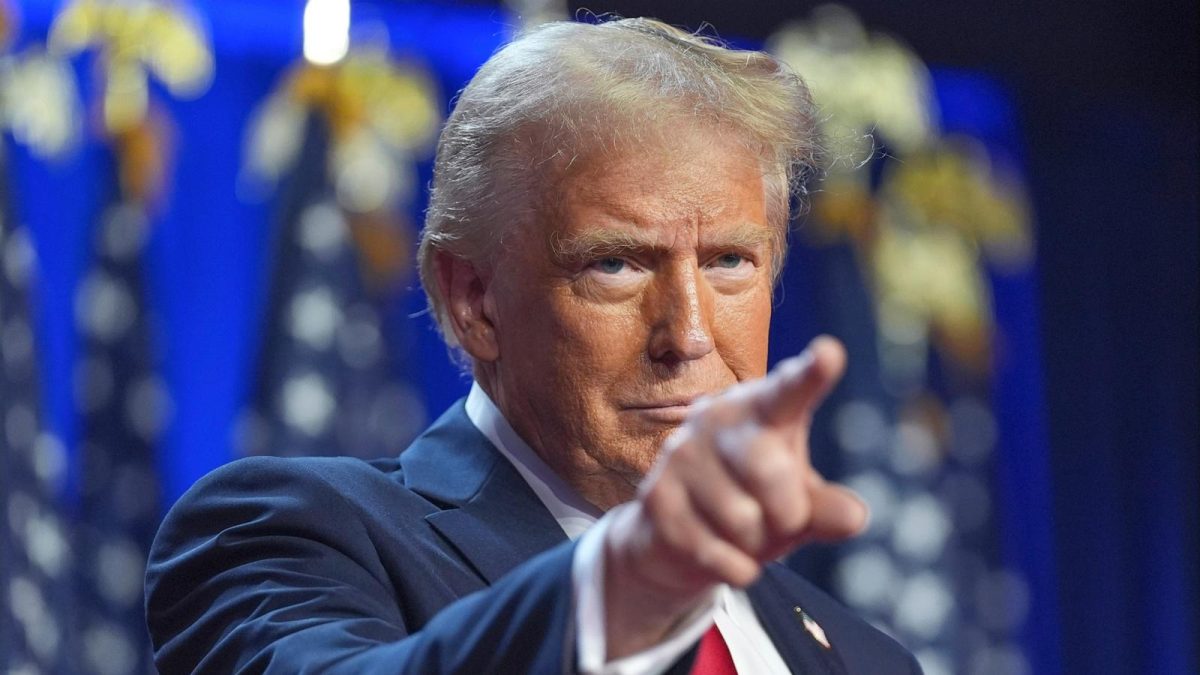
Fast forward to 2024, then, Presidential Candidate Trump declares that, if he becomes president again, he will vow to release all of the Epstein files.
In mid 2025, now former Attorney General Pam Bondi said that an Epstein “client list” was sitting on her desk, insinuating the release of the files. Also in 2025, Giuffre, the key witness to the Epstein saga, commits suicide.
After months of speculation and attempts to release the files, House Democrats released a sexually suggestive letter, signed by President Trump, from a 2003 album for Epstein’s 50th birthday. President Trump denied any association with that letter. Furthermore, In 2025, Maxwell defended Trump during a series of questioning, claiming that President Trump had no wrongdoing.
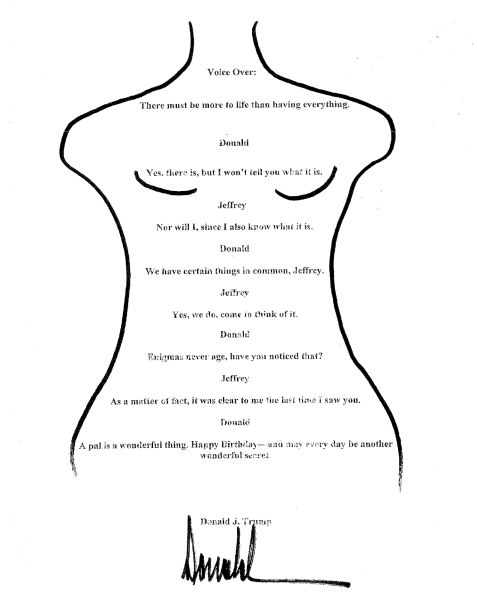
At the end of 2025, Trump continued to re-appear in the files: a 2019 email written by Epstein claimed that Trump “knew about the girls.” In the aftermath, Bondi decides to begin investigating Democrats such as Bill and Hillary Clinton. Around the same time, congress officially passed the bipartisan Epstein Files Transparency Act, introduced by Reps. Ro Khanna (D) and Thomas Massie (R).
After the release of Giuffre’s posthumous memoir, Mountbatten-Windsor and the royal family came into the spotlight again. Mountbatten-Windsor was subsequently stripped of his titles, evicted from his royal living quarters, and arrested on suspicion of misconduct while in public office, making him the first senior royal to be arrested since King Charles I, in 1646, during the English Civil War.
At the beginning of 2026, the Justice Department officially began the public release of 3 million pages of documents, supplemented by 2,000 videos and 180,000 images.
Since this release, many powerful names have been discovered in the files such as Elon Musk, Howard Lutnick, Larry Summers, etc. There are thousands of individuals in the files that have had relationships with Epstein, ranging from casual encounters, to illegal schemes and practices. The sheer volume of material has made it difficult for the public to dissect everything that has been revealed. However, despite the difficulties of the investigations, it has become increasingly evident that Epstein’s network of individuals was a carefully constructed web of high profile people, reaching the highest levels of power globally.
The Jeffrey Epstein saga will go down as a scandalous and shocking blemish in American history. However, Sexual abuse advocates have continued to fight harder than ever to deliver truth, accountability, and justice to the situation.